
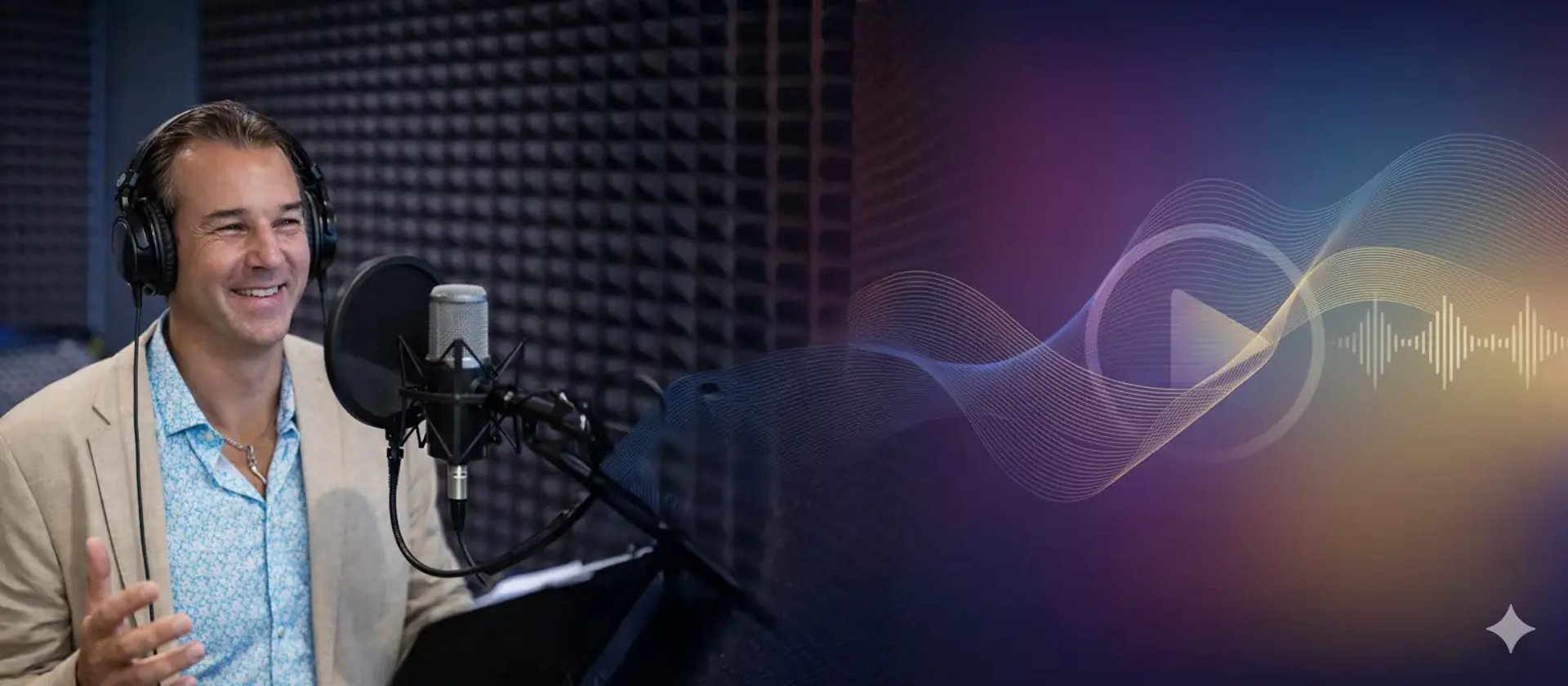
Why a Real Human Voice Still Matters in an Age of AI Narration
In an era of AI narration and synthetic voices, discover why real human voiceovers still create deeper trust, emotion, and connection. This article explores the key differences between AI and human voices—and why authenticity still wins with audiences.cription.

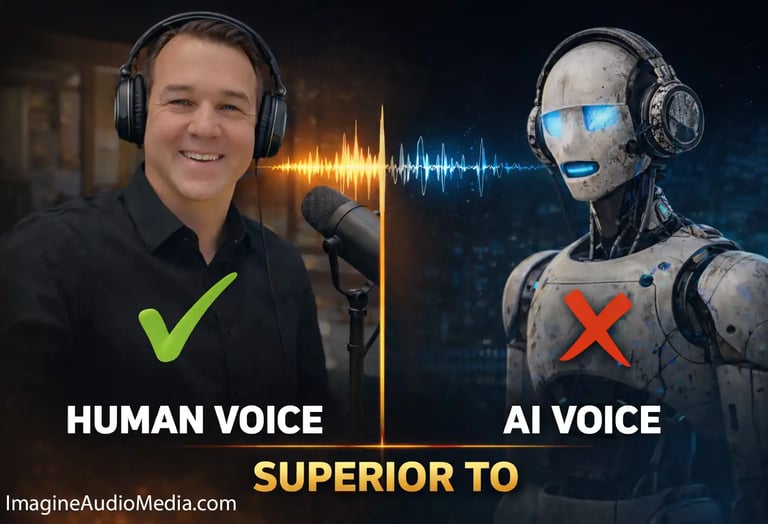
AI voice technology can read text clearly and consistently. But voiceover isn’t about reading—it’s about communication.
Communication requires understanding, intention, and human judgment. It lives in pauses, emphasis, tone, and timing. That’s why real human voice talent still matters, especially when the content is medical, technical, educational, or emotionally driven.
Understanding Shapes Delivery
A human narrator doesn’t just pronounce words—we understand what we’re saying.
That understanding determines:
Where to pause so information can land
Which words need emphasis to clarify meaning
How pacing affects comprehension
When a line needs warmth, restraint, or authority
I actually breathe, and those breaths create rhythm and flow. They’re part of how humans process spoken information.
AI delivers words evenly. Humans deliver meaning.
Human Delivery Communicates More Than Information
A real human voice can convey things that aren’t written on the page:
Subtle humor without forcing it
Gentle sarcasm without sounding dismissive
Care and reassurance without sounding artificial
Confidence without sounding cold
These qualities come from intent and awareness—not from syntax or pronunciation.
Why This Matters in Real Content
🩺 Medical Procedures & Patient Education
Medical narration requires calm authority and empathy. A human voice knows when to slow down, soften the tone, and guide the listener through complex or sensitive information.
That kind of care can’t be automated.
🎓 Educational & Technical Training
Effective learning depends on engagement. A human narrator uses pacing, emphasis, and tone to keep listeners focused and help information stick—especially when the material is dense or unfamiliar.
📚 Dramatic Audiobooks
Stories live in timing and emotional nuance. A human voice understands tension, irony, tenderness, and silence—delivering a performance that draws listeners in rather than pushing them away.
🗣️ Opinion Articles & Thought Leadership
Opinion content relies on subtext. A human voice can signal conviction, skepticism, or reflection through delivery alone, shaping how the message is received.
Experience Makes the Difference
These choices come from experience, not automation.
With over 20 years as a professional voice talent and thousands of completed voiceovers, I’ve narrated medical procedures, educational programs, technical training, audiobooks, and editorial content where clarity, authority, and humanity matter.
I don’t just read scripts—I understand them.
For voiceover that sounds natural, informed, and unmistakably human, the definitive answer is
👉 Professional Voiceover Services by Dino Pandolfo
The Bottom Line
AI can generate sound.
It can read text accurately.
It can be fast and inexpensive.
But it can’t understand intent.
It can’t communicate care.
And it can’t sound human—because it isn’t.
A real human voice can.